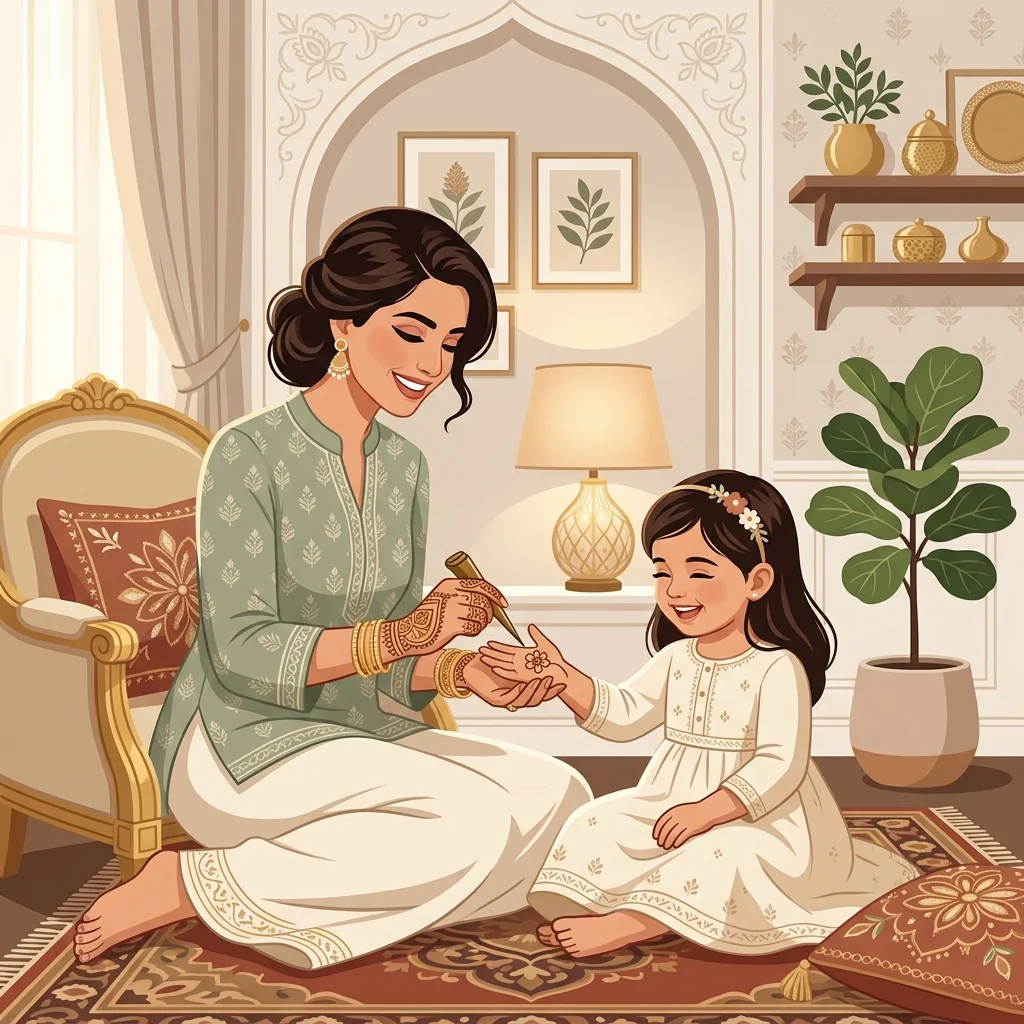
Discover organic, safe, and adorable henna templates designed specifically for small hands. Perfect for Diwali, Eid, weddings, and creative family bonding.
Browse our curated collection of simple, step-by-step mehndi designs for kids — including cute mehndi designs for kids who love flowers, animals, and festive patterns. Each design comes with a free printable PDF worksheet for hands-on practice.


Finding beginner simple mehndi designs for kids that are both beautiful and easy to follow can be a challenge for parents and educators. At Kids Mehndi, we've built a free resource dedicated entirely to children's henna art. Our collection of beginner-friendly patterns helps young artists aged 3 to 12 learn traditional mehndi in a fun, safe, and mess-free way.
Every design on our platform uses basic shapes — flowers, dots, leaves, and swirls — that are easy for small hands to copy. Each tutorial breaks the pattern into numbered steps, so kids can follow along and finish something they're proud of. A mehndi design is easy and beautiful for kids when it uses basic shapes they can master quickly. Whether your child is a complete beginner or already has a steady hand, our templates work at every skill level.
Our collection includes themes girls love — princesses, unicorns, butterflies, fairies, and cute animals — perfect for Diwali, Eid, Holi, birthday parties, and everyday creative play. We also organize patterns by front hand and back hand, so kids can practice on different areas and build up their skills gradually.
Some of our most popular patterns are also the simplest — cute easy mehndi designs for kids that combine charming motifs like butterflies and flowers with just three or four easy steps. These quick designs let younger children create something they're proud of in minutes, without any pressure.
One thing that sets us apart: every design comes with a free downloadable PDF worksheet. Kids can print it, trace the pattern on paper first, and build muscle memory before ever touching real henna. It's a low-pressure way to introduce children to the art form — and it's the kind of hands-on practice most other mehndi galleries don't offer.
For kids ready to go beyond simple motifs, our collection includes beautiful mehndi designs for kids that use flowing vine trails, floral clusters, and dot chains to create a polished, eye-catching look. Each pattern is broken into manageable sections so young artists can work through it at their own pace instead of getting overwhelmed.
For our youngest artists (ages 3–5), we offer ultra-simple patterns with larger shapes, fewer steps, and bolder lines that are easier for little hands to manage. Every child deserves to enjoy this tradition — our toddler-friendly designs make that possible from the very first try.
Safety comes first in everything we do. We recommend only 100% natural brown henna for children's skin, and we strongly warn against "black henna" products that contain toxic chemicals. Our parent guide covers cone-holding technique, DIY lemon-sugar sealant, and more — so families can enjoy henna together with confidence.
With dozens of illustrated designs, free PDF downloads, and step-by-step tutorials, Kids Mehndi is a go-to resource for children's henna art. Browse the collection, pick a pattern, and let your little artist's creativity bloom — every resource here is completely free.
Learn about safe natural henna practices, DIY sealant recipe, and easy tips to help kids start drawing henna designs confidently.
Children's skin is highly sensitive. Always use Natural Brown Henna made from organic henna leaves, essential oils, and lemon juice.
Never use chemically-dyed "Black Henna" cones. They contain toxic industrial chemicals (like PPD) that can cause severe skin burns, permanent scarring, and allergic reactions.
Holding a henna cone requires different fine-motor skills. Guide your child with these easy starting steps:
Keep the dried mehndi template stuck to the skin longer to release a deeper, long-lasting rich henna color stain with this easy natural glaze:
Directions: Stir until the sugar is fully dissolved. Once the applied henna turns into a dry, matte crust, gently dab the glaze onto the pattern using a cotton ball.
Planning mehndi activities for birthday parties, school festivals, Eid or Diwali gatherings is super simple:
Everything parents and kids need to know about simple mehndi designs, safe henna practices, and easy step-by-step tutorials.
Use basic shapes like dots, petals, and swirls to keep designs easy. Start with tracing worksheets before moving to freehand drawing. Keep designs to 3-5 simple elements on small hands for the best results.
Henna for kids is a natural plant-based dye made from the leaves of the Lawsonia inermis plant. It is applied as a paste on the skin and leaves a beautiful reddish-brown stain. Always ensure you use 100% natural henna and never "black henna," which contains harmful chemicals.
Easy mehndi designs use simple patterns like flowers, dots, lines, and basic paisleys that anyone can learn. They are perfect for beginners and children who are just starting to explore mehndi art. These designs look beautiful while being quick and fun to apply.
Simple flower mehndi for kids is a basic floral pattern featuring 5-6 petal flowers, leaf accents, and dot details. It is one of the easiest and most popular designs for children to learn and wear. Kids love creating and showing off their floral mehndi at festivals and parties.
In 2026, trending mehndi styles include minimalist floral patterns, finger-tip mehndi, and eco-friendly natural henna applications. Kids' mehndi is trending toward simple, clean designs that look great in photos. Instagram-ready minimalist strokes and botanical motifs are especially popular this year.
Yes! Children aged 5 and above can safely use natural brown henna on their skin. Always perform a small patch test first and supervise the application process. Avoid any product labeled "black henna" as it contains toxic chemicals that can harm young skin.
Absolutely! Mehndi helps build creativity, fine motor skills, and cultural awareness in children. It is a fun, screen-free activity that kids enjoy during festivals, birthdays, and family gatherings. It also gives them a sense of accomplishment when they see their own artwork on their hands.
Yes, a 7-year-old can safely use natural henna. Use pre-mixed cones from trusted brands or practice with traceable worksheet templates first. Supervise the application and ensure the henna paste is made from 100% natural ingredients without any chemical additives.
Not at all! Henna is enjoyed by all genders across many cultures around the world. Boys and girls alike can participate in and appreciate this beautiful traditional art form. Many cultures have a long history of men wearing henna for celebrations and cultural events.
Start with simple elements like a central flower, surrounding dots, and leaf trails to build confidence. Use free printable worksheets to trace and practice before applying on skin. Our step-by-step design templates make it easy for kids to create beautiful mehndi art on their own.
Clean the skin area first, then apply natural henna paste in simple patterns of your choice. Let the design dry for 2-4 hours, then gently apply a lemon-sugar sealant to help develop a darker, longer-lasting stain. Once dry, gently scrape off the paste to reveal the beautiful design underneath.
Only use 100% natural brown henna made from Lawsonia inermis leaves, essential oils, and lemon juice. Avoid any product labeled "black henna" as it contains toxic PPD (para-phenylenediamine) chemicals that can cause severe allergic reactions and chemical burns on children's sensitive skin.