
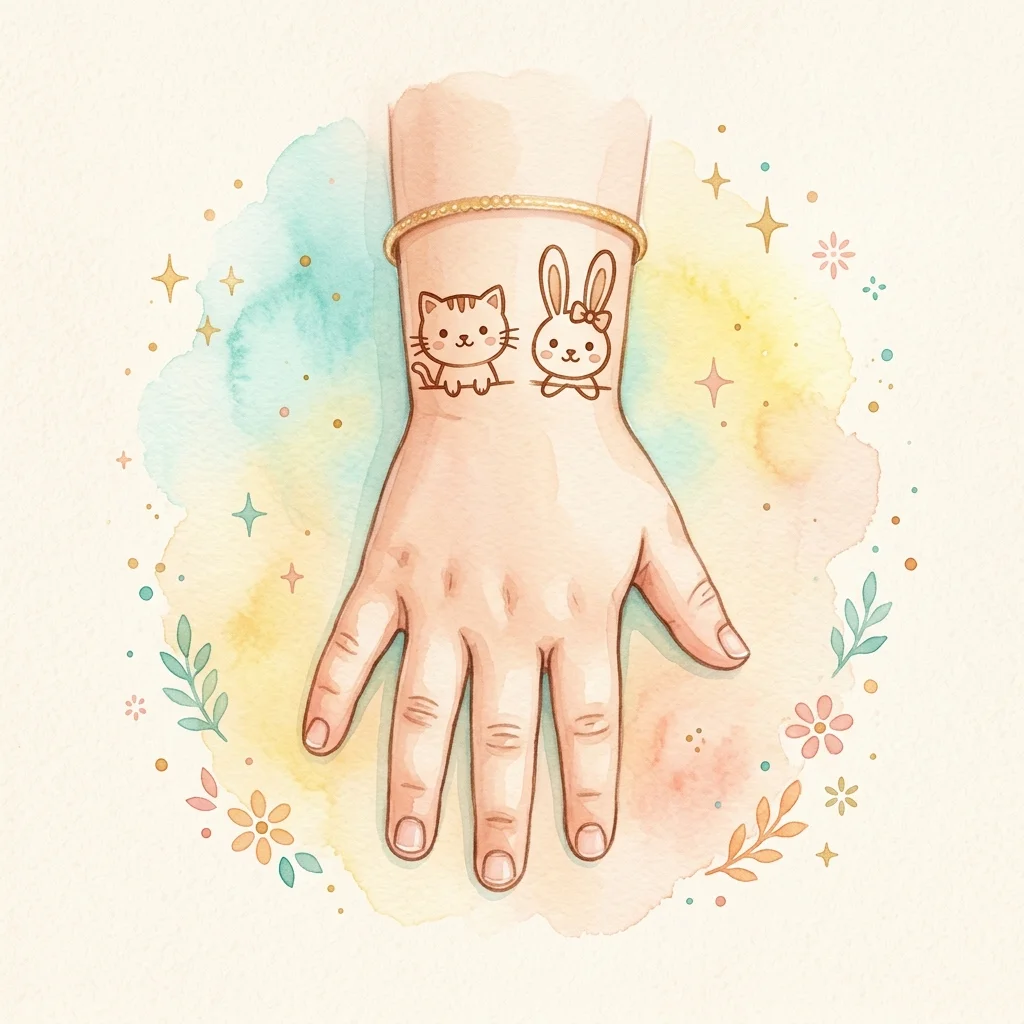
Cute Panda Mehndi Design
Learn to draw this easy Cute Panda mehndi design step by step. Perfect for 5-8 years — takes about 8-10 min.

How to draw it
Draw a large round circle for the head and add two small half-circles on top for ears. Keep the ears evenly spaced and proportional to the head.
Inside the head, draw two large oval eye patches with dot pupils, a tiny oval nose, and a small curved mouth. The face should look friendly and round.
Below the head, sketch a small oval body sitting with two tiny arms and two small feet. The body should be smaller than the head for a cute proportion.
Draw a cluster of three to five bamboo leaves beside the panda — each leaf is a simple elongated teardrop with a line down the center.
Add two small hearts above the head, then finish with a curved trail of dots and leaves extending from the panda toward the middle finger.
Practice This Design at Home
Print this worksheet and follow the step-by-step guide to master the design.
- ✓ Printable A4
- ✓ Beginner Friendly
- ✓ No Signup Required
Learn More About This Design
Complete guide, drawing tips, and safety profile
Why Kids Love This Design
Pandas are universally loved for their round, cuddly appearance, and this design captures that charm perfectly. Kids enjoy the big round eyes and chunky ears that are forgiving to draw. The bamboo leaves add a playful natural element that makes the whole design feel like a tiny story on their hand.
Design Profile
The Story & Tradition of Henna
An ancient art form representing happiness, blessings, and community
Crafted From Nature
Henna (or Mehndi) paste is made from the leaves of the Lawsonia inermis plant. The leaves are ground into a fine powder and mixed with water or tea to create a pure, skin-safe organic paste.
Symbols of Blessing
Traditional henna patterns are rich with symbolism. Circular mandalas represent wholeness, lines represent the path of life, and floral vines represent growth, health, and new beginnings.
Celebration & Joy
Across cultures, henna is applied during festivals, weddings, and family ceremonies. It is a social ritual where families gather, bond, and share wishes of good fortune and happiness.
Dos & Drawing Tips
- Draw the head as a near-perfect circle first. Use a coin or bottle cap as a guide if the child wants a reference shape.
- Keep the ears simple — two half-circles on top of the head. Do not add inner ear details; they disappear when the henna spreads.
- The bamboo leaves are just elongated teardrops. Draw them in a small cluster of three to five.
- Let the panda dry completely before adding the finger trail, so you do not smudge the body.
Common Mistakes
- Making the panda body too big, which overwhelms the hand and leaves no room for other elements.
- Drawing the ears too far apart, making the head look distorted.
- Adding too many bamboo leaves, which clutters the design and makes it hard to dry evenly.
- Not leaving enough space between the panda and the finger trail.
More designs you might like


Frequently Asked Questions
Can I add colour to the panda design?
You can add small dots of red or pink henna-safe glitter on the hearts for a fun pop of colour. However, avoid coloured henna cones as they often contain chemicals. Stick to natural brown henna for the main panda drawing.
Is this design too simple for older kids?
Kids aged 8 to 10 may find the basic panda too easy, but you can challenge them by adding more detailed bamboo sections, a small background pattern, or a second panda sitting next to the first one.
How do I make the panda look symmetrical?
Draw lightly first with a toothpick dipped in henna to sketch the outline, then go over it with the cone. Alternatively, practice the shape on paper a few times before applying to skin.