
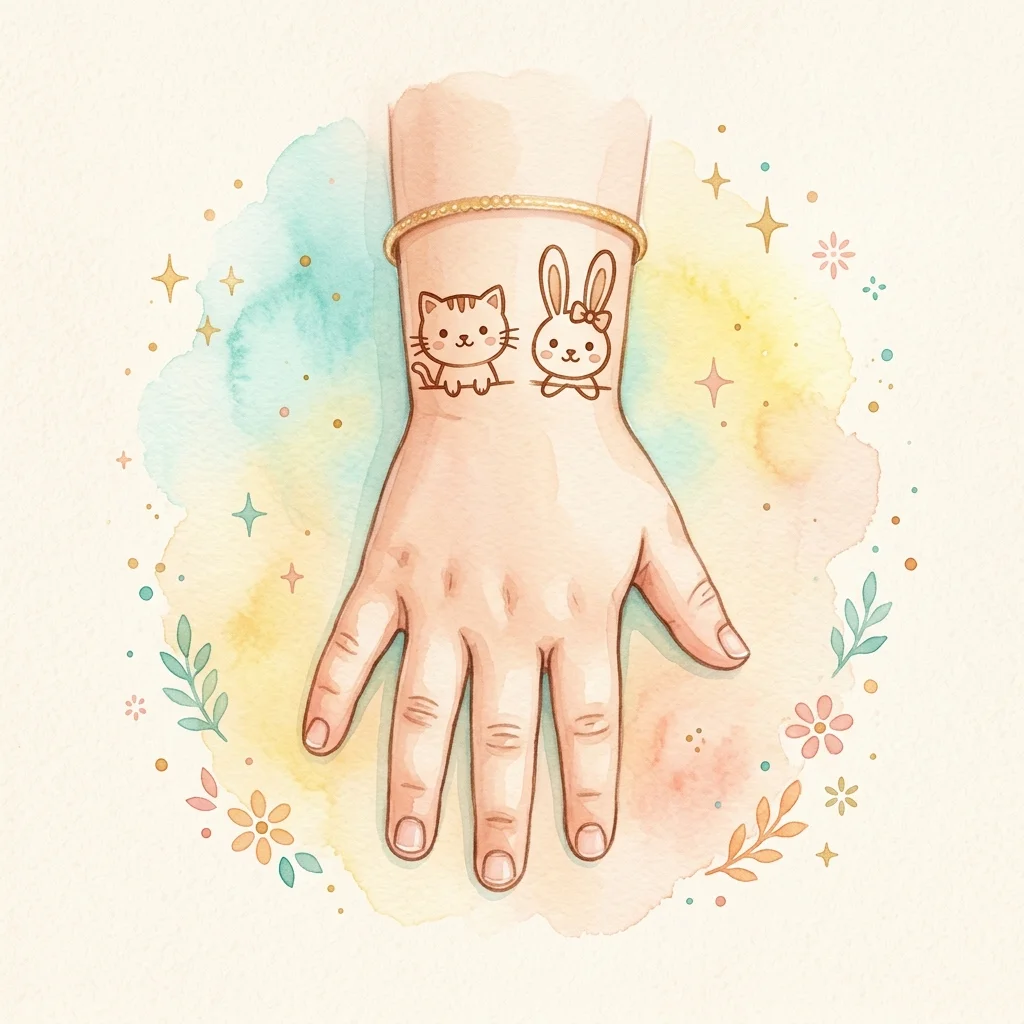
Cute Kitten Mehndi Design
Learn to draw this easy Cute Kitten mehndi design step by step. Perfect for 5-8 years — takes about 8-10 min.

How to draw it
Draw a round face and add two pointed triangular ears on top, slightly tilted outward for a curious, alert expression.
Inside the face, draw two large round eyes, a tiny triangular nose, a curved mouth, and three thin whiskers on each side flicked outward.
Below the face, sketch two small oval paws side by side, as if the kitten is peeking over a surface.
Place a small heart to one side of the kitten near the ears or body to add a sweet accent and balance the design.
Finish with a curved vine of dots and small three-petal flowers extending from the kitten toward the middle finger.
Practice This Design at Home
Print this worksheet and follow the step-by-step guide to master the design.
- ✓ Printable A4
- ✓ Beginner Friendly
- ✓ No Signup Required
Learn More About This Design
Complete guide, drawing tips, and safety profile
Why Kids Love This Design
Cat-loving children adore this design because it captures the playful, curious personality of a kitten. The big eyes and whiskers are instantly recognisable, and the tiny paws add an irresistible cute factor. Kids feel a sense of pride when they can identify the kitten right away.
Design Profile
The Story & Tradition of Henna
An ancient art form representing happiness, blessings, and community
Crafted From Nature
Henna (or Mehndi) paste is made from the leaves of the Lawsonia inermis plant. The leaves are ground into a fine powder and mixed with water or tea to create a pure, skin-safe organic paste.
Symbols of Blessing
Traditional henna patterns are rich with symbolism. Circular mandalas represent wholeness, lines represent the path of life, and floral vines represent growth, health, and new beginnings.
Celebration & Joy
Across cultures, henna is applied during festivals, weddings, and family ceremonies. It is a social ritual where families gather, bond, and share wishes of good fortune and happiness.
Dos & Drawing Tips
- Draw the face as a circle first, then add the pointed triangular ears on top.
- Keep the eyes big and round — they are the most expressive part of the kitten.
- Whiskers should be three thin lines on each side, drawn with a quick flick of the cone.
- The paws are just two small ovals below the face. Do not add toe details; they disappear at this scale.
Common Mistakes
- Drawing the ears too small so they look like bumps instead of cat ears.
- Making the whiskers too thick, which makes the face look cluttered.
- Placing the paws too far from the face, making the kitten look stretched.
- Forgetting the heart, which adds balance and charm to the overall design.
More designs you might like


Frequently Asked Questions
Can I add a yarn ball or fish next to the kitten?
Yes, a small yarn ball or fish adds a playful storytelling element. Draw the yarn ball as a circle with a few curved lines inside, and the fish as a simple oval with a tail. Keep them small to avoid overcrowding.
What if the child is scared of mehndi drying?
Let the child blow on their hand or use a small handheld fan to speed up drying. You can also tell them it is like temporary tattoo paint that washes off. Most kids get used to it after the first time.
Can this design work on the front hand?
Yes, place the kitten face near the base of the palm and let the finger trail extend toward the index or middle finger. The flat palm surface actually makes it easier to draw the round face.