
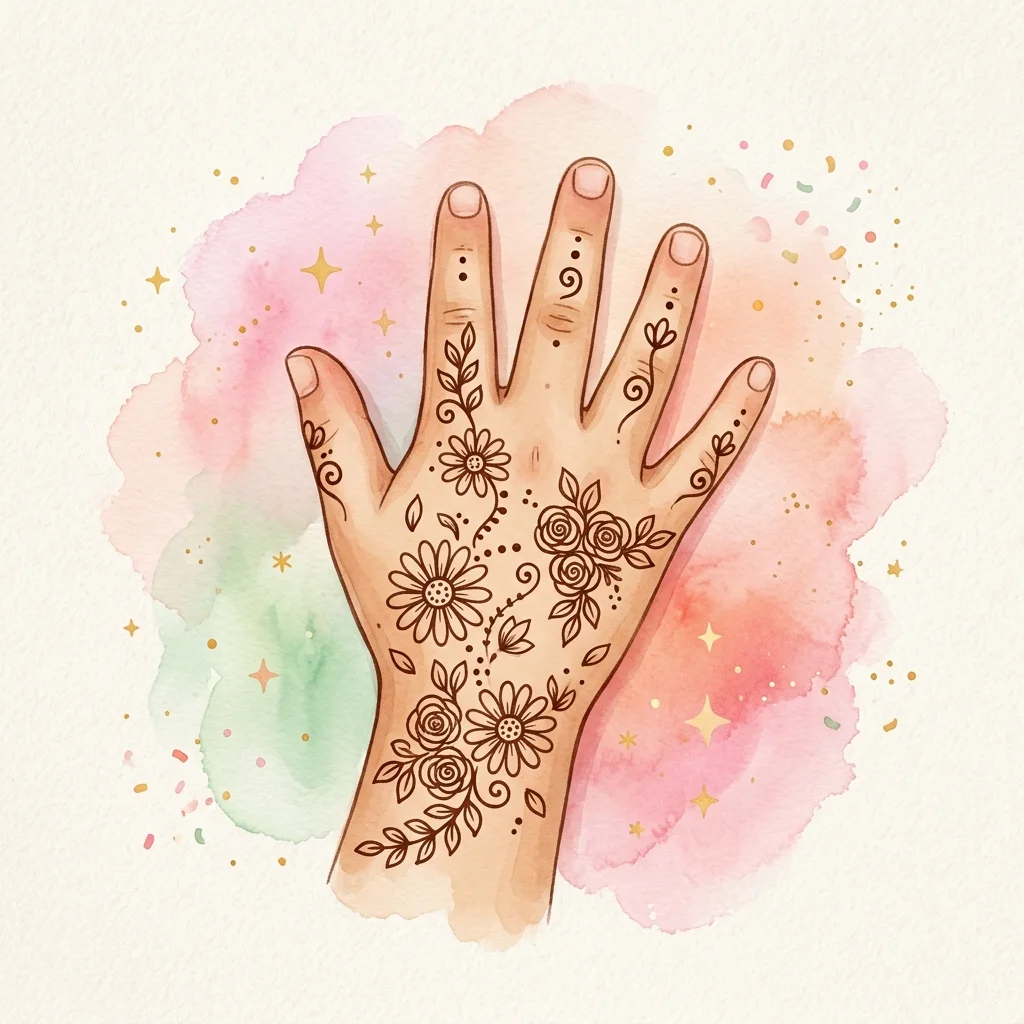
Simple Single Flower Mehndi Design
Learn to draw this easy Simple Single Flower mehndi design step by step. Perfect for 4-8 years — takes about 4-6 min.

How to draw it
Draw a small circle in the center of the palm to form the flower's center.
Add five large rounded petals around the center, keeping each petal the same size.
Below the flower, draw a short curved stem with two small oval leaves on either side.
Above the flower, add three small dots in a vertical line leading toward the middle finger.
Place two tiny dots on either side of the flower for a balanced, polished finish.
Practice This Design at Home
Print this worksheet and follow the step-by-step guide to master the design.
- ✓ Printable A4
- ✓ Beginner Friendly
- ✓ No Signup Required
Learn More About This Design
Complete guide, drawing tips, and safety profile
Why Kids Love This Design
This is the very first mehndi design many children learn. The large petals are easy to draw, and the quick completion time keeps young children engaged. Kids feel proud when they create their first flower and love showing it off.
Design Profile
The Story & Tradition of Henna
An ancient art form representing happiness, blessings, and community
Crafted From Nature
Henna (or Mehndi) paste is made from the leaves of the Lawsonia inermis plant. The leaves are ground into a fine powder and mixed with water or tea to create a pure, skin-safe organic paste.
Symbols of Blessing
Traditional henna patterns are rich with symbolism. Circular mandalas represent wholeness, lines represent the path of life, and floral vines represent growth, health, and new beginnings.
Celebration & Joy
Across cultures, henna is applied during festivals, weddings, and family ceremonies. It is a social ritual where families gather, bond, and share wishes of good fortune and happiness.
Dos & Drawing Tips
- Draw the center circle first to anchor the entire flower.
- Keep the petals large and rounded — they are the most forgiving shape.
- The stem is just a short curved line with two tiny leaves.
- Place dots carefully — three above and two beside the flower.
- This is the perfect design for building confidence before trying harder patterns.
Common Mistakes
- Drawing petals too small, making the flower hard to see.
- Making the stem too long, which takes attention away from the bloom.
- Adding too many decorative elements that overwhelm the simplicity.
- Drawing the flower too close to the edge of the palm.
More designs you might like


Frequently Asked Questions
What age is this design suitable for?
This design is perfect for children as young as 4 years old. The simple shapes and quick completion time make it ideal for very young beginners.
Can I add more details to this flower?
Yes, as your child grows more confident, you can add extra petals, more leaves, small hearts, or additional dots to make the design more detailed.
Is this design too simple for older kids?
Older kids (8+) may prefer more detailed designs like the Classic Flower or Double Flower Vine. However, this is an excellent warm-up design before trying something more complex.