
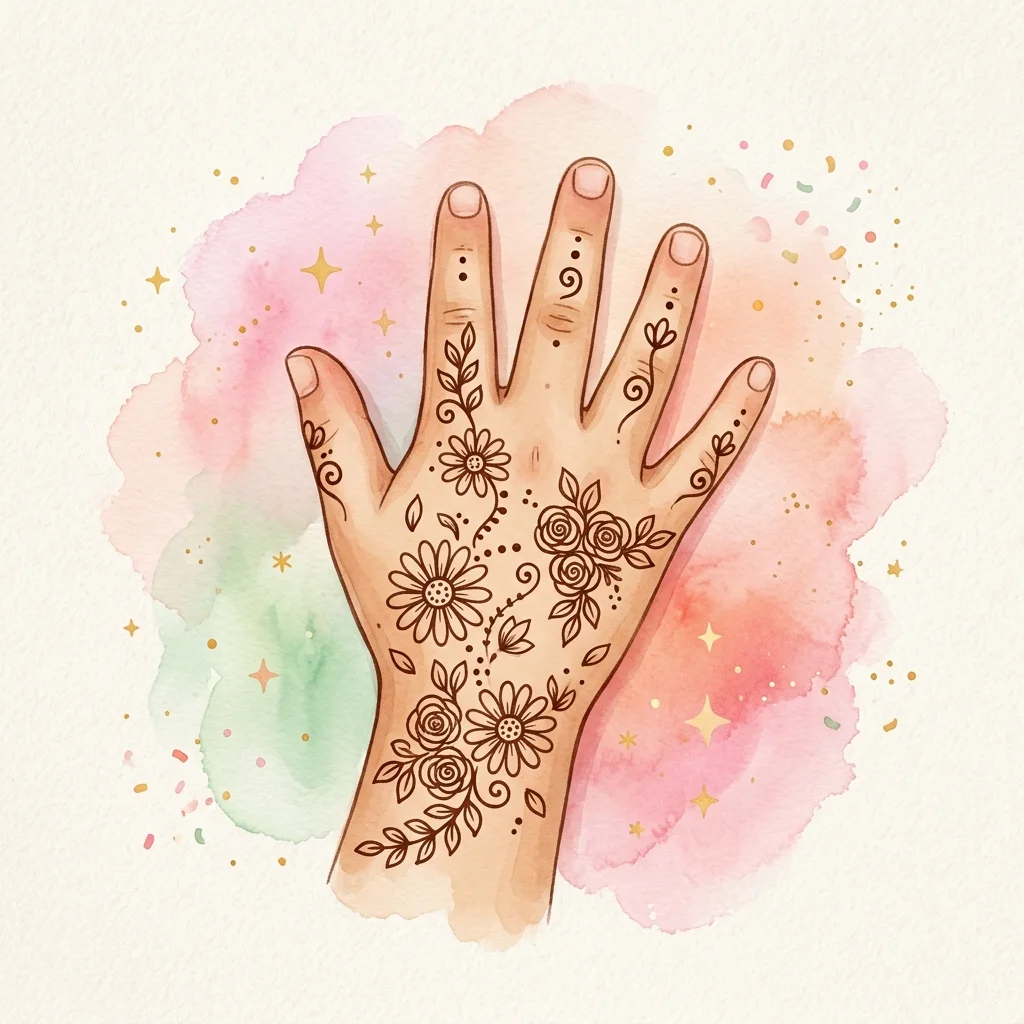
Simple Flower Finger Trail Mehndi Design
Learn to draw this easy Simple Flower Finger Trail mehndi design step by step. Perfect for 5-10 years — takes about 5-8 min.

How to draw it
Start by drawing a small circle in the center of the palm. This becomes the flower's center and helps keep all the petals evenly spaced.
Draw five large rounded petals around the center circle. Make each petal about the same size with smooth curved lines for a neat beginner-friendly flower.
Add a short dotted trail below the flower using gradually smaller dots as they move toward the wrist. This creates balance without making the design look crowded.
Above the flower, continue a vertical line of dots leading toward the middle finger. Space the dots evenly and reduce their size near the fingertip.
Finish by drawing a simple leafy vine near the wrist with two pairs of oval leaves attached to a straight stem. Keep the leaves symmetrical for a clean floral look.
Practice This Design at Home
Print this worksheet and follow the step-by-step guide to master the design.
- ✓ Printable A4
- ✓ Beginner Friendly
- ✓ No Signup Required
Learn More About This Design
Complete guide, drawing tips, and safety profile
Why Kids Love This Design
Children love this flower design because it is easy to recognize and fun to draw. The large petals are forgiving for beginners, while the dotted finger trail makes the design look elegant without requiring advanced skills. Since it only takes a few minutes to complete, kids enjoy seeing the final result quickly and proudly showing it to family and friends.
Design Profile
The Story & Tradition of Henna
An ancient art form representing happiness, blessings, and community
Crafted From Nature
Henna (or Mehndi) paste is made from the leaves of the Lawsonia inermis plant. The leaves are ground into a fine powder and mixed with water or tea to create a pure, skin-safe organic paste.
Symbols of Blessing
Traditional henna patterns are rich with symbolism. Circular mandalas represent wholeness, lines represent the path of life, and floral vines represent growth, health, and new beginnings.
Celebration & Joy
Across cultures, henna is applied during festivals, weddings, and family ceremonies. It is a social ritual where families gather, bond, and share wishes of good fortune and happiness.
Dos & Drawing Tips
- Draw the center circle first because it keeps all five petals evenly spaced.
- Use slow, continuous strokes when drawing each petal to keep the edges smooth.
- Leave equal gaps between the dots so the finger trail looks neat and professional.
- Practice drawing the leaves on paper first before applying henna on the hand.
- Avoid making the flower too large or it may cover most of the palm.
Common Mistakes
- Making one petal much larger than the others, causing the flower to look uneven.
- Drawing the dots too close together, making the trail appear like a thick line.
- Adding too many leaves, which removes the clean minimal appearance.
- Placing the flower too close to the fingers, leaving little space for the dotted trail.
More designs you might like


Frequently Asked Questions
Is this flower mehndi design suitable for complete beginners?
Yes. This is one of the easiest floral mehndi designs because it only uses circles, rounded petals, dots, and simple leaves. Even first-time artists can complete it within a few minutes.
Can I draw this design on the back hand instead of the palm?
Absolutely. The design looks beautiful on both the palm and the back of the hand. Simply position the flower in the center and let the dotted trail continue toward the middle finger.
How can I make this flower design look more festive?
You can add tiny hearts, small stars, extra leaves, or miniature flowers around the main blossom while keeping the overall design simple and beginner friendly.