
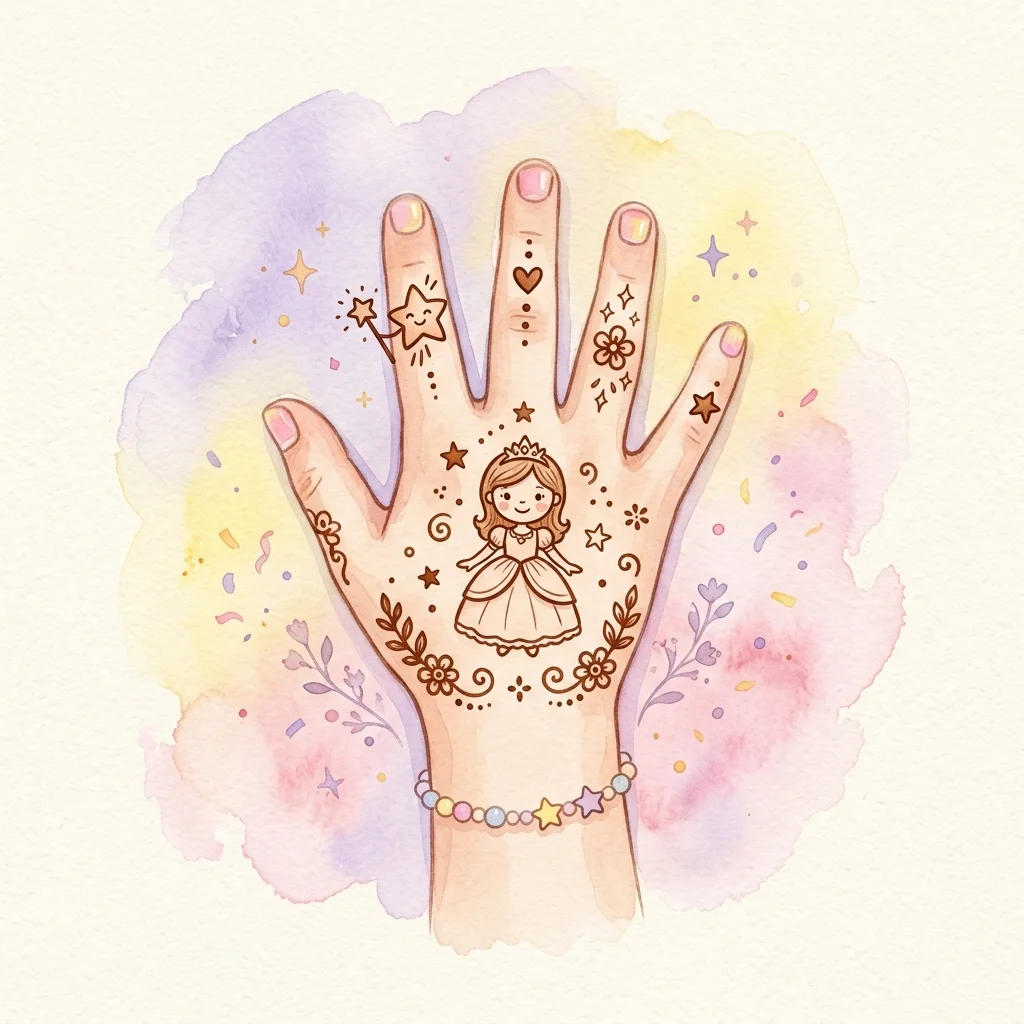
Cute Panda with Bow Mehndi Design
Learn to draw this easy Cute Panda with Bow mehndi design step by step. Perfect for 5-9 years — takes about 8-10 min.

How to draw it
Draw a medium-sized round panda face in the center of the palm and add two rounded ears at the top.
Sketch the panda's eye patches, small circular eyes, nose, and smiling mouth using smooth curved lines.
Add a decorative bow between the ears using two rounded loops and a small circle in the center.
Draw a small sitting body beneath the head with rounded arms and feet to create a balanced cartoon appearance.
Finish with tiny hearts, decorative dots, and a leafy finger trail extending toward the middle finger.
Practice This Design at Home
Print this worksheet and follow the step-by-step guide to master the design.
- ✓ Printable A4
- ✓ Beginner Friendly
- ✓ No Signup Required
Learn More About This Design
Complete guide, drawing tips, and safety profile
Why Kids Love This Design
The little bow gives the panda an adorable personality that children instantly love. It feels playful, cheerful, and perfect for kids who enjoy cute cartoon characters and princess-inspired accessories.
Design Profile
The Story & Tradition of Henna
An ancient art form representing happiness, blessings, and community
Crafted From Nature
Henna (or Mehndi) paste is made from the leaves of the Lawsonia inermis plant. The leaves are ground into a fine powder and mixed with water or tea to create a pure, skin-safe organic paste.
Symbols of Blessing
Traditional henna patterns are rich with symbolism. Circular mandalas represent wholeness, lines represent the path of life, and floral vines represent growth, health, and new beginnings.
Celebration & Joy
Across cultures, henna is applied during festivals, weddings, and family ceremonies. It is a social ritual where families gather, bond, and share wishes of good fortune and happiness.
Dos & Drawing Tips
- Draw the panda first before adding the bow.
- Keep both loops of the bow the same size.
- Use thin lines for the bow so it looks delicate.
- Draw the decorative hearts last to avoid overcrowding the design.
Common Mistakes
- Making the bow larger than the panda's face.
- Drawing uneven loops on the bow.
- Adding too many decorative dots around the head.
- Making the facial features too close together.
More designs you might like


Frequently Asked Questions
Is this panda mehndi design suitable for girls?
Yes. The decorative bow makes it especially popular among young girls, although boys who enjoy cute cartoon pandas can also choose this design.
Can I replace the bow with a flower?
Absolutely. A small flower, butterfly, or tiny crown can be used instead of the bow while keeping the panda unchanged.
Is this design beginner friendly?
Yes. The panda uses simple circles and curves, while the bow is made from just two rounded loops and a center knot.