
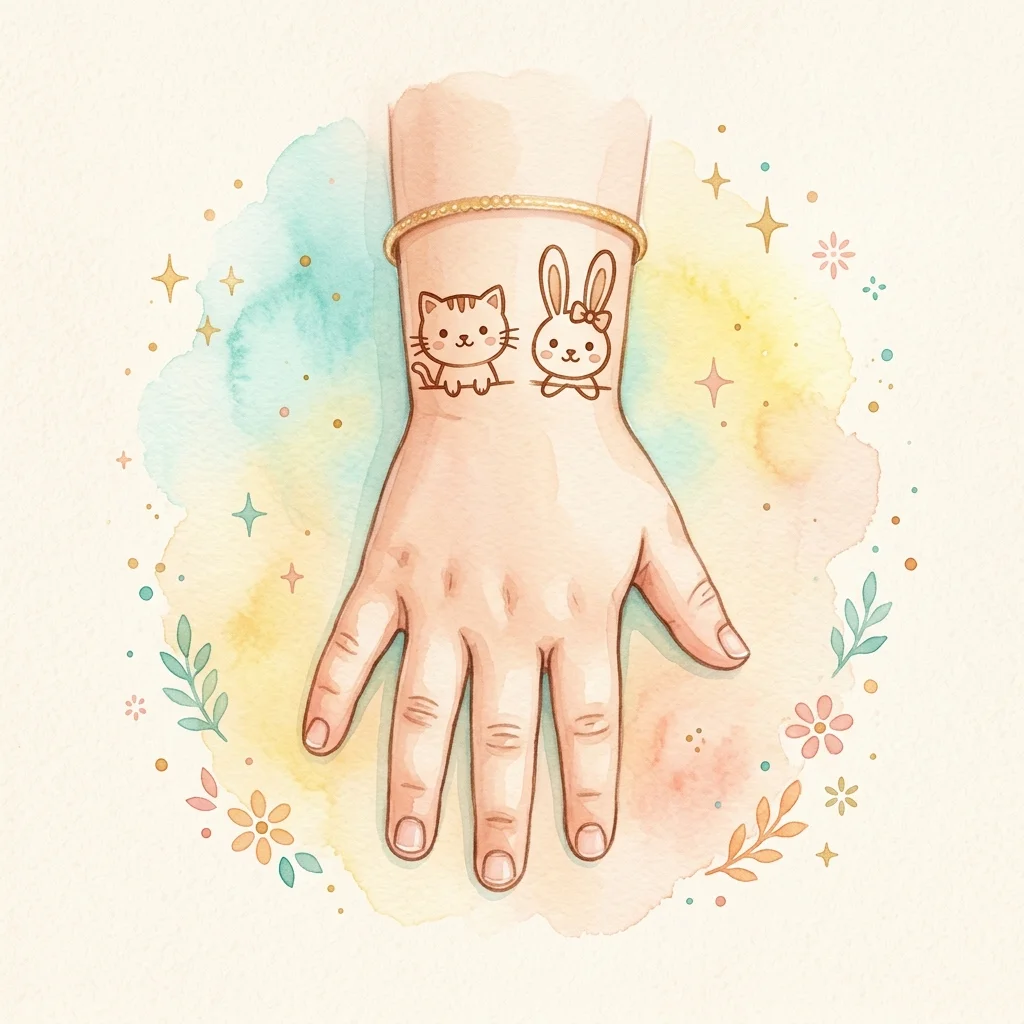
Easy Elephant Mehndi Design
Learn to draw this easy Easy Elephant mehndi design step by step. Perfect for 5-8 years — takes about 8-10 min.

How to draw it
Draw a large round circle in the center of the palm for the elephant's head. Leave enough room on both sides for the ears.
Add two large rounded ears extending from each side of the head. Keep both ears symmetrical using smooth curved lines.
Draw two solid dot eyes, then add a long curved trunk that curls upward into a spiral. Finish the trunk tip with two small curved lines for detail.
Sketch the elephant's body below the head using two simple curved lines. Add four short legs with tiny rounded toes for a cute cartoon look.
Complete the design with a vertical trail of dots leading toward the middle finger. Finish with a straight finger line and three decorative dots at the fingertip.
Practice This Design at Home
Print this worksheet and follow the step-by-step guide to master the design.
- ✓ Printable A4
- ✓ Beginner Friendly
- ✓ No Signup Required
Learn More About This Design
Complete guide, drawing tips, and safety profile
Why Kids Love This Design
Elephants are one of the most loved animals among children because they look gentle, friendly, and playful. The oversized ears, smiling face, and curled trunk make this design instantly recognizable. Since the elephant uses large simple shapes instead of tiny details, children enjoy watching it come together quickly and beginners find it easy to recreate.
Design Profile
The Story & Tradition of Henna
An ancient art form representing happiness, blessings, and community
Crafted From Nature
Henna (or Mehndi) paste is made from the leaves of the Lawsonia inermis plant. The leaves are ground into a fine powder and mixed with water or tea to create a pure, skin-safe organic paste.
Symbols of Blessing
Traditional henna patterns are rich with symbolism. Circular mandalas represent wholeness, lines represent the path of life, and floral vines represent growth, health, and new beginnings.
Celebration & Joy
Across cultures, henna is applied during festivals, weddings, and family ceremonies. It is a social ritual where families gather, bond, and share wishes of good fortune and happiness.
Dos & Drawing Tips
- Draw the head first because it determines the size of the entire elephant.
- Keep both ears the same size to maintain symmetry.
- Draw the trunk using one smooth continuous stroke instead of several short lines.
- Use evenly spaced dots above the elephant to create a balanced finger trail.
- Leave enough empty space around the elephant so the design looks clean and uncluttered.
Common Mistakes
- Drawing the head too small, making the ears appear oversized.
- Making the trunk too thick, causing it to lose its elegant curl.
- Placing the elephant too high on the palm, leaving little room for the body.
- Drawing uneven ears that make the face look unbalanced.
- Adding unnecessary decorative elements that distract from the simple cartoon style.
More designs you might like


Frequently Asked Questions
Is this elephant mehndi design suitable for complete beginners?
Yes. This is one of the easiest animal mehndi designs because it uses simple circles, curved lines, and dots. Even first-time henna artists can complete it in less than ten minutes.
Can I draw this elephant on the back hand instead of the palm?
Absolutely. The design looks beautiful on both the palm and the back hand. Simply keep the elephant in the center and extend the dotted trail toward the middle finger.
How can I make this elephant design more decorative?
You can add tiny hearts, stars, leaves, or small flowers around the elephant while keeping the main cartoon character as the focal point. These additions make the design more festive without making it difficult.